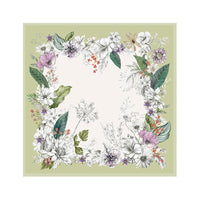
At WomanScarf we combine traditional handwork with modern production methods to manufacture three high-value product families: rhinestone scarves (crystal/bling scarves), hot-fix (hotfix) rhinestone scarves, and beaded / tube-bead scarves. Each category requires different raw materials, skills and machine support; our manufacturing system is configured to deliver both small bespoke orders and scalable bulk runs for international buyers on platforms such as online platform. This article explains the step-by-step processes we use, the quality checkpoints we enforce, and the customization options we offer to help you select the right product and order profile for your market.

Raw materials, matching the design to function:
We begin every production cycle with material selection and prototyping. Typical base fabrics include chiffon, satin, silk-blend, modal and cotton — chosen for drape, weight and dye stability. For rhinestones and hot-fix applications we source glass and AB finish crystals, hotfix rhinestones (pre-glued with thermoplastic adhesive), and transfer films or pre-set transfers for complex patterns. For beaded and tube-bead scarves we source glass tube beads, seed beads, pearls and high-tensile nylon thread or bonded polyester thread for long-term durability. All incoming materials undergo a receiving inspection for color, hand feel, GSM/weight and dimensional tolerance before moving to sampling.
Prototyping and process selection (sample stage)
Before mass production we create fully finished samples. Samples are essential because the same rhinestone or transfer parameters behave differently on chiffon versus satin: heat sensitivity, adhesive wetting and fabric distortion vary. For each sample we record processing parameters — if hot-fix is chosen we log temperature, dwell time, pressure and cooling protocol; if hand-sewn rhinestones or beads are chosen we log stitch type, thread count and anchoring method. This sample pack becomes the production SOP (standard operating procedure) for the batch.
Production flow: rhinestone scarves (glue-on / sew-on)
-
Fabric preparation — prewash / pre-shrink and press to remove sizing and stabilize dimensions.
-
Layout and marking — templates or digital markers are used to precisely mark rhinestone positions or graphic outlines.
-
Attachment — depending on design: (a) hand-sew method for sew-on rhinestones or beads (preferred for high-end, wash-resistant finishes); (b) industrial adhesive application for glue-on flat-back rhinestones where speed is required. Adhesive types are selected based on fabric chemistry and washability requirements.
-
Curing and setting — adhesives are cured under controlled humidity and temperature; sewn pieces receive a secondary securing stitch where needed.
-
Trimming and finishing — remove excess glue, tidy thread ends, and perform final pressing (with protective cloth over embellishments).
-
Inspection — 100% visual and sample pull tests for critical areas, plus random wash test.
-
Packing — use anti-abrasion tissue and polybags to protect embellishments in transit.

Production flow: hot-fix (hotfix) rhinestone scarves — efficient bulk method
-
Transfer design & tooling — patterns are created either as pre-placed transfer sheets or via CAD templates for automated pick-and-place systems.
-
Surface prep & positioning — fabric is tensioned on heat-resistant pallets to prevent slippage. Accurate positioning jigs ensure repeatability.
-
Heat application — using a programmable heat-press or line hot-press conveyor, we apply the recorded temperature/pressure/time parameters to activate the thermoplastic adhesive on hotfix rhinestones or to transfer pre-set rhinestone sheets.
-
Controlled cooling and peel — after heat cycle finishes we often allow a short cooling period (or cold-peel depending on transfer type) to maximize adhesive bond.
-
Post-process testing — adhesion tests, colorfastness and visual inspection; for garments shipped to humid climates we run accelerated aging tests.
-
High throughput packaging — this method supports consistent, repeatable graphic placement and higher per-hour throughput than hand application.
Production flow: beaded & tube-bead scarves — artisan and semi-automated options
-
Design & bead selection — decide between sewn-on bead tassels, pre-made beaded trims, or integrated on-loom bead insertion. Choice depends on appearance, price point and lead time.
-
Hand-made tassels and fringes — artisans string tube beads, seed beads and pearls into decorative tassels; each tassel is knotted and anchored with multiple locking stitches. This method gives superior movement and luxury feel.
-
Beaded trims and machine attachment — for mid-to-large runs we source beaded trims that can be sewn on by machine, or use specialized bead-feeding attachments on sewing lines to improve speed.
-
Securing & finishing — all bead anchors are double-stitched and a drop of clear textile adhesive is applied at internal knots for abrasion resistance. Final trimming and quality control follow.

Quality control: checkpoints we enforce on every batch
We document and enforce QC at multiple stages: incoming material inspection, in-process checks (adhesive temperature logs, seam tensile tests, bead pull tests), final visual inspection (pattern accuracy, embellishment alignment, absence of glue stains), and outbound inspection (random wash & abrasion tests). For international buyers we provide digital QC reports with inspection photos, parameter logs and batch traceability. Our acceptable defect rates and corrective action plans are agreed before sample approval.
Care instructions and labeling (customer facing):
We include clear care labels for each product: recommended hand wash or professional dry clean, avoid machine tumble drying, iron on low with protective cloth, and avoid direct contact between perfume/chemical sprays and embellishments. These instructions reduce post-sale returns and increase customer satisfaction in target markets.
Customization, MOQ and lead times (practical commercial details):
We support factory customization: custom transfers, exclusive colorways, private-label tags, hangtags and bespoke packaging. Typical MOQs depend on the process: hotfix transfers and beaded trims are efficient at mid volumes (200–2,000 pcs); hand-sewn rhinestone and fully hand-beaded products are suitable for small luxury runs (10–200 pcs). Lead times are confirmed after sample approval; we recommend finalizing materials and artwork early to prevent delays. Contact our sales team via womanscarf.com for a tailored quote.
FAQ :
Q1: What is the difference between a rhinestone scarf and a hot-fix rhinestone scarf?
A: A rhinestone scarf may use sew-on or glue-on flat-back crystals, while a hot-fix (hotfix) rhinestone scarf uses stones with thermoplastic adhesive on the back that bond under controlled heat/pressure. Hot-fix is faster and more consistent for bulk runs; sew-on is more durable for heavy-use garments.
Q2: How do you protect delicate chiffon from heat during hot-fix?
A: We use low-temperature hotfix stones, optimize pressure/time, employ heat-resistant pallets and run test cycles on identical fabric lots to define an SOP that avoids scorching or distortion.
Q3: Can you do private label and custom packaging?
A: Yes — we offer private-label tags, custom polybag and gift box printing, and pack-list/document customization for international shipping. MOQ and lead time vary by packaging spec.
Q4: What quality guarantees do you provide?
A: Each order ships with a QC report and agreed reject/repair thresholds; we also provide remedial action plans for defects discovered within agreed warranty windows.
Closing & how to start an order:
If you are sourcing rhinestone, hot-fix or beaded scarves for retail, wholesale or private label, we invite you to request samples from WomanScarf. A recommended next step is to ask for a sample pack including:
1. a hand-sewn rhinestone sample
2. a hot-fix sample with the transfer you prefer
3. a beaded tassel sample — this allows you to assess appearance, weight, washability and handling characteristics before placing a production order. Visit womanscarf.com or email our sourcing team for a factory quote and lead-time estimate. We look forward to partnering with you to deliver quality, consistent and market-relevant scarf collections.