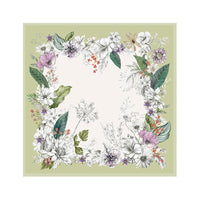
A lace-trim scarf seam is the line where a decorative lace border meets the main scarf body. Photos can tell you a fair amount about how that join looks in flat and draped arrangements, but they cannot confirm stitch construction, thread choice, or how the seam will behave after wear and laundering. This article walks through what a careful buyer can reasonably read from images, what needs a physical sample, and how to frame a useful supplier request. For a working example throughout, View the lace-edge scarf featuring a plain base with a contrasting floral lace border.

Two edges, one attachment line
Before assessing any lace-trim scarf seam, separate two distinct features in your mind.
- The outer decorative edge: the scalloped, pointed or floral outline of the lace itself. Start by locating this outline separately from the join to the scarf body.
- The attachment line: the seam where the lace panel meets the main scarf body. This is the area to request in close-up when asking about the attachment.
A rippling scallop and a ripple at the attachment line are different observations. A flat outer edge does not tell you whether the join behind it is even. Look for both, and identify which line you are commenting on.
What a flat front view can show
A relaxed flat front photograph, taken squarely from above with even lighting, is a useful starting point for a visual inspection. From it you can generally observe:
- Whether the attachment line runs parallel to the scarf edge or drifts inward and outward.
- Whether the lace panel sits flush with the base fabric or overlaps visibly.
- Whether the scallops on opposite ends of the scarf are aligned in the same orientation.
- Whether there are obvious puckers, gathers or loose thread tails near the join.
What it cannot show is what is happening on the reverse. A neat front can conceal a bulky or loosely finished underside, so a front-only photograph is never enough on its own.

Why the reverse view matters
Ask for, or check for, a reverse-side photograph of the same seam area. On the back of a lace-trim scarf you may be able to see:
- How the raw edge of the base fabric has been enclosed or overcast.
- Whether the seam allowance lies flat or folds unevenly.
- Whether the stitching visible from behind matches the front line in placement.
Clear close-ups may reveal stitch details, but the available gallery views do not establish the exact construction, thread composition or strength of this product. Treat reverse images as descriptive, not diagnostic.
Relaxed flat versus draped views
A scarf photographed flat and a scarf photographed draped over a mannequin or arm will look meaningfully different at the seam, and both are useful.
- Flat and relaxed: reveals geometry — is the attachment line straight, are the two long edges symmetrical, do corners match.
- Draped: reveals behaviour — does the lace edge fall softly, does the seam create a visible ridge, does the join gather where the fabric folds.
Comparing the two lets you record whether waves appear in both arrangements. That comparison alone does not establish why they occur. The gallery for this example includes both flat arrangements and mannequin drapes, which is the kind of pairing worth requesting from any supplier.

Why ripples alone do not prove a cause
Check how the piece was arranged before interpreting a wave at the join. A fold in a styled photograph is not the same observation as a ripple in a relaxed seam close-up. As one thread manufacturer explains, sewing thread tension can compress fabric along a seam and produce small waves, especially in very thin delicate cloth (AMANN, tension puckering). This is generic guidance about sewing in general, not a diagnosis of any particular scarf. A photograph rarely lets you separate these causes with confidence.
The practical takeaway: note ripples, describe where they appear, but do not label them as defects from an image alone.
Inspecting a physical sample without damaging it
If a sample arrives, you can learn a great deal by handling it carefully. You do not need to pull threads, cut stitches, or apply heat to make useful observations.
- Lay the scarf on a clean flat surface and photograph both faces under the same light.
- Run a fingertip lightly along the attachment line to note bulk or hard spots, then inspect any area of concern visually.
- Compare corresponding lace sections without forcing them to align; ask which edges are intended to match.
- Hold the piece up to a soft light source to see whether the seam allowance shows through as an even shadow or an irregular one.
- Gently drape it over your forearm and note whether the lace edge falls or stands stiffly.
Avoid tug tests, stretching the seam to its limit, or any wet or heat treatment. Those actions can damage the sample and still will not give a repeatable measurement. If you need laundering evidence, request written confirmed care guidance from the supplier and follow it exactly.
A useful supplier photo request
Rather than asking generally for "more photos", specify what you need. A workable request might read:
- One flat front image of the full scarf on a plain background.
- One flat reverse image of the same scarf, same orientation.
- Two close-up images of the lace attachment line, one front and one reverse, close enough to show the stitches clearly and in focus.
- One image of the scarf draped naturally, without pinning or styling.
- One image of a folded corner showing how the lace ends meet.
Ask for images of the exact colourway you are considering. Photographs of a different colour can differ in visible contrast at the seam.
Keep a short inspection record
Use one note for each area you want clarified. Record the colourway, which face is visible, where the join sits, and whether the scarf is folded, flat or draped. Pair a whole-piece photograph with the close-up so the supplier can locate the same section. For example: “On the reverse near this corner, the join looks raised in the flat view. Please show the same area unfolded and explain the intended finish.” This describes an observation without claiming to know its cause.
Keep the supplier's reply beside your photos. If you later receive a sample, compare that same area under a similar arrangement, and record any unanswered question. For a wholesale enquiry, this creates a clearer reference for discussing an acceptable sample than a general request for “better quality”. It is your inspection note, not a certificate or proof that a whole order will match.
FAQ
Is every wave along the edge a fault?
No. Record whether the wave follows the decorative outline or appears at the join. If one area looks different from the rest, request a matched close-up and an explanation before deciding.
Can photographs prove a seam is strong?
No. Images can show appearance and placement. They cannot demonstrate stitch security, thread strength or how a seam will behave after repeated wear. Informal sample handling can reveal appearance and feel; it does not establish seam strength. Ask about appropriate test evidence if strength is a purchasing requirement.
What if care instructions are not stated?
Do not guess. Ask the supplier to confirm care guidance in writing before laundering any sample, and follow what they provide. Keep your observations separate from any later care trial so that you have a clear before-and-after record.
Make the next request specific
A lace-trim scarf seam rewards patient looking rather than quick judgement. Distinguish the decorative lace outline from the attachment line, ask for matched front and reverse images, and compare flat and draped views before drawing conclusions. Reserve firmer assessments for a sample in hand, inspected without destructive testing. To see the example referenced here, View the lace-edge scarf. For wholesale, customisation or OEM/ODM enquiries, use the contact page to outline what you would like to inspect and which images or samples would help your decision.