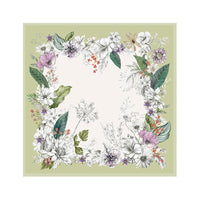
The modest-wear and hijab accessory market has entered 2026 with floral prints occupying a prominent role across seasonless and seasonal assortments. Retailers and exporters are reporting steady demand for floral hijabs and floral scarves that perform both as everyday essentials and as elevated pieces for formal and bridal inventory. This article analyzes the commercial drivers behind the trend, practical sourcing and merchandising guidance for wholesalers and boutique buyers, and concrete steps to capitalize on floral assortments — including customization and private-label options.

Market context: continued expansion of modest and Islamic apparel markets
Global market indicators point to ongoing growth in Islamic and modest apparel segments, creating a favorable demand environment for hijabs and complementary accessories. Recent market reports project mid-single-digit to high-single-digit CAGRs for Islamic clothing and related categories into the mid-2020s, a macro backdrop that supports investment in diversified hijab assortments including floral prints. For wholesale buyers, growth projections reduce category risk and make floral collections a defensible assortment choice.
Why florals — design drivers and consumer preference signals:
Print and color forecasts for 2026 emphasize both romantic florals and bolder botanical treatments, with complementary palettes spanning jewel tones, earthy neutrals, and soft pastels. Textile and print-forecast resources identify floral motifs as a core category for Spring/Summer 2026, often executed with watercolor effects, mixed scales, and vintage-inspired botanicals that translate well to scarf drops and bridal hijab sub-lines. These design forecasts are useful to wholesale buyers when planning SKU depth and seasonal drops.
Fabric strategy: matching fiber to market segment:
Commercial success for floral hijabs depends on pairing print treatments with appropriate fabrics. Lightweight chiffon and silk are preferred in formal and bridal channels for their drape and sheen; cotton, modal and viscose blends dominate everyday, high-velocity segments due to comfort and lower care barriers. Fabric-market reports emphasize sustainable, breathable textiles and increased demand for customizable prints and performance finishes in 2026 — factors that influence MOQ negotiation, pricing, and lead times. When sourcing, insist on clear GSM, width, and wash-care specs and request physical swatches or lab dips to validate color and hand.

Commercial assortment and merchandising tactics for wholesalers & boutiques:
Practical merchandising increases sell-through and reduces returns: group floral scarves into palettes (e.g., jewel, pastel, neutral), offer both square and rectangle formats, and create mixed-fabric bundles (cotton basics + chiffon premium) so buyers can test customer response with controlled risk. Produce retail-ready presentation for boutiques (hangtags, folded polybags, sample display kits) — these details materially improve boutique adoption and speed up reorders. For exporters, set up mixed-SKU price breaks and transparent lead-time tables to make procurement predictable.
Sourcing advantage — why choose a supplier with consolidated capabilities (example): partner with vendors who can run mixed-material production (chiffon + cotton + silk), offer flexible MOQs, and support private-label and pre-shipment QC workflows. womanscarf.com, for instance, provides consolidated production planning, sample kits, and private-label options to help boutique buyers and foreign-trade merchants streamline assortment testing and order scaling.
Customization & private-label as a competitive lever:
Customization continues to be a value differentiator: exclusive repeat sizes, bespoke colorways, and private-label packaging increase perceived value and protect margins. Suppliers that provide digital proofs, physical sample swatches, and short pre-production runs enable boutique buyers to pilot micro-collections before committing to larger orders. If your business model depends on differentiation, request proof of previous private-label work and a clear mockup/approval workflow. womanscarf.com accepts custom print files, supplies digital proofs, and offers private-label packaging for boutique orders — a practical route to exclusive assortments.
Sourcing checklist and KPIs for wholesale procurement:
For efficient sourcing and predictable margins, we recommend the following checklist and KPIs:
-
Confirm fabric composition, GSM, and width; request lab dips or physical swatches.
-
Validate print repeat, placement, and scale on sample panels.
-
Negotiate MOQs and mixed-SKU price breaks.
-
Confirm lead times, incoterms, and sample to bulk approval workflow.
-
Set target sell-through rates (e.g., 6–8 weeks for seasonal florals) and return thresholds.
Buyers who standardize these checkpoints shorten procurement cycles and reduce downstream quality disputes.
Pricing & margin framework for boutiques and exporters:
Adopt a tiered pricing model:
entry-level floral cottons priced for volume, mid-tier modal/viscose with balanced margins, and premium silk/chiffon bridal florals with higher markups. For international buyers, factor landed cost (FOB + freight + duties) into margin calculations and build in promotional allowances for initial launch promotions. Publish clear tiered pricing for mixed lots to help boutique buyers test assortments without prohibitive inventory exposure.
Case study snapshot — rapid assortment test (example workflow):
-
Request a 12-piece sample kit (4 cotton florals, 4 modal blends, 4 chiffon/silk premiums).
-
Run a two-week pop-up or online pre-sale with bundled pricing to measure sell-through.
-
If launch metrics meet KPI (e.g., 25% pre-order conversion on pop-up), convert to a 500–1,000 pc mixed order with graded color/size allocations.
This pilot approach reduces exposure and provides data for reorder quantities and colorway optimization. Suppliers offering sample kits and production flexibility (like womanscarf.com) make this efficient for boutiques and exporters.

Q&A:
Q1: What MOQs should I plan for seasonal floral runs?
A1: MOQs depend on fabric and customization level. Standard cotton or viscose prints often have lower MOQs (50–150 pcs per color); bespoke silk or digitally printed chiffon can require higher minimums. Negotiate mixed-fabric lots and ask suppliers for graded price breaks to reduce upfront inventory.
Q2: How long are typical lead times from sample approval to bulk shipment?
A2: For ready-to-print stock prints, lead times can range 4–8 weeks; for custom prints with digital proofs and strikeoffs, expect 8–14 weeks depending on order size and factory queue. Always confirm production schedules and pre-shipment QC timelines in writing.
Q3: What documentation should I require for quality assurance?
A3: Request physical sample approvals, a pre-shipment inspection report (AQL), fabric specification sheet (GSM, width, composition), and packaging mockups for private-label items. These documents are standard for international wholesale transactions.
Q4: Can floral designs be adapted for multiple price tiers?
A4: Yes. The same floral artwork can be graded across fabric tiers (cotton → modal → silk) and scaled appropriately for different price points. Work with suppliers who can optimize print repeat sizes and colorways for each fabric type.
Q5: How do I request samples or customization from womanscarf.com?
A5: Use the wholesale/contact section at womanscarf.com to request sample kits, upload artwork for custom prints, or request a quotation. Include desired fabric, estimated MOQ, and preferred shipping port to obtain an accurate quote and lead-time estimate.