From Grandma's Scarf to Fashion Icon: The Comeback Journey of the Babushka

What is a Babushka Scarf?
In Russia, a scarf is never called a "Babushka." That is a Western term. In colloquial Russian, "babushka" means "grandmother" or "old woman" and has no relation to headwear. The word "Babushka" itself originates from Russian, meaning "grandmother." In ancient Rus, it was considered shameful for women not to wear a head covering. While the headgear of the English Queen isn't a crown, the tradition of covering one's head persists. In Western culture today, we mainly see head coverings in bridal veils, but in the early 20th century, Western urban women would wear at least a thin veil when going out. Russian peasant women did not cover their faces daily, but it was considered improper to lose or undo their headscarves in public. There was a colloquial verb, "onpoCTOBOJIOCNTbCA" – now used only figuratively to mean "to make a rather foolish mistake" – whose literal meaning was "to be bare-headed." Women of the Russian upper class, however, wore hats instead of headscarves. Later, the Westernized aristocratic society developed its own set of rules, which weren't truly driven by Orthodox values.
Today, it is a fashion choice, but until recently, many elderly women still respected this ancient tradition because they were born into it. Of course, Orthodox women are still required to cover their hair when entering a church (while Orthodox men need to remove any headwear inside the church). Some churches popular with tourists provide scarves for female visitors who don't have one.
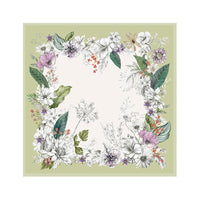
It symbolizes family, warmth, and a simple way of life. Made of sturdy cotton, linen, or silk, with intricate floral or geometric patterns, it carries history and memory.
Beyond its function, this headscarf has also become a cultural symbol. It appears not only on many Russian nesting dolls but is also a typical image of Eastern European rural life. To some extent, it is an integral part of the "grandma image" in a generation's memory. The uniqueness of this cultural symbol provides fashion designers with endless inspiration.
Transformation from Tradition to Fashion
The Babushka scarf's ability to break through cultural barriers and become a popular fashion item was crucially driven by celebrity influence and brand promotion.

Speaking of celebrities, one must mention the rapper A$AP Rocky. In 2018, he wore a yellow Gucci headscarf to the LACMA Art and Film Gala, a bold look that quickly attracted widespread attention. Subsequently, he even released the single "Babushka Boi," wearing the traditional headscarf throughout the music video, even following the "rustic" traditional method of folding the square scarf into a triangle, placing the right angle at the back of the head, and tying the other two corners under the chin. In an interview with DAZED, he proudly stated, "Honestly, I just wanted to show off my Babushka today." This quickly sparked a trend of imitation in the fashion world. Soon after, celebrities like Kendall Jenner and Bella Hadid also embraced the look, turning it into a fashionable label.
In recent years, Asian stars such as G-Dragon have frequently been seen at airports sporting the Babushka style, further propelling its popularity globally. Luxury brands have also seized this trend. Brands like Gucci, Dior, and Versace have featured headscarf-wearing styles on their runways, infusing this traditional item with high-fashion appeal. For example, Gucci used this element in its advertising campaign for the Fall/Winter 1999 collection, and recently, the Babushka element has appeared frequently on runways.

Modern Styling: Diverse Interpretations of the Babushka
Today, the Babushka scarf is no longer limited to one way of tying it. Fashion enthusiasts have developed various wearing methods, breathing new life into this traditional item.
-
Classic Retro Style:
Fold the scarf into a triangle, place it over the head, and tie it under the chin, recreating the elegant style of 1950s Hollywood stars like Audrey Hepburn and Grace Kelly.

-
Streetwear Style:
Mix the Babushka with street elements like baseball caps and sunglasses to create a striking blend of retro and trendy vibes. This style is particularly popular among younger demographics.

-
Quiet Luxury Style:
Choose an elegantly printed silk scarf or woolen wrap, drape it casually over the head, and wrap it once around the neck. Pair it with a beige trench coat or overcoat to create a low-key, luxurious "old money" atmosphere.

On the 2025-2026 fashion stage, the Babushka scarf continues to showcase its diversity. From Celine making the scarf a core element, to Dries Van Noten exploring the layering of scarves with netted headpieces, and AWGE highlighting the scarf's streetwear DNA, various brands are reinterpreting this traditional item in their own ways.
The Fashion Cycle: Why Did the Babushka Successfully Break Through?
The success of the Babushka scarf is no accident; it reflects several important trends in contemporary fashion:
-
The Return of Vintage Trends:
In the fast-paced fashion world, vintage elements have always been an important source of inspiration for designers. The Babushka scarf, carrying profound historical and cultural significance, naturally became a target for the fashion world to explore.
-
Blurring Gender Boundaries:
Traditionally considered a female-exclusive item, the headscarf has been reinterpreted by male fashion icons, breaking gender stereotypes and showcasing the boundlessness of fashion.
-
Fusion of Multicultural Elements:
The Babushka's journey from Eastern European traditional culture to a global fashion item exemplifies fashion's role as a cultural bridge. The collision and fusion of different cultural elements create entirely new aesthetic experiences.
-
The Demand for Individual Expression:
In an era that pursues individuality, people crave showcasing their unique taste through clothing. The Babushka scarf, as a striking accessory,perfectly meets this need.

-
Conclusion: The Eternal Dance of Tradition and Innovation
The fashion journey of the Babushka scarf is a fascinating story about cultural heritage and innovation. Its transformation from an everyday accessory for Eastern European grandmothers to a global fashion icon perfectly illustrates the adage that "fashion is a cycle."
This small scarf tells us that true style transcends the limits of time and trends. When we combine traditional cultural elements with modern aesthetics, we can create unique expressions that are both rooted in history and facing the future.
Perhaps the next time you open your grandmother's wardrobe, you might find the next fashion hit hidden there. After all, the most forward-looking styles are often hidden within the most unassuming traditions.
We offer a wide variety of sizes and styles of babushka scarves, shawls, and headscarves, and accept custom orders and wholesale inquiries. Please contact us if you are interested!