To organize square scarves in a drawer, give each scarf a visible identifying edge and enough support to be removed on its own. Try a short row of loosely folded scarves in a smooth compartment, then lift one from the middle and put it back. If the row collapses or the fabric needs tugging, change the arrangement before filling the drawer.
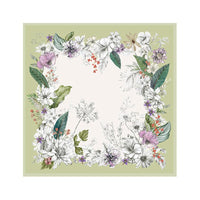
The WomanScarf paisley square scarf is a useful example because its plain outer border and patterned centre provide two different visual clues. The listing gives an approximate size of 90 × 90 cm and describes polyester satin. Start with your actual scarf and drawer; a product photograph cannot establish the folded size or whether a particular organizer will work.
Choose the detail you want to recognize
Lay the scarf open and look for a feature you can identify from a small exposed section. On the grey gallery example, the broad plain edge differs clearly from the dense inner border and pale paisley centre.
Choose which of those details will face upward when the scarf sits in its compartment. Showing only a plain grey band might work if this is your only grey scarf. If you own several similar pieces, leave a little of the paisley pattern visible as well.
The aim is to recognize the scarf without lifting out every candidate. You do not need to display the complete print inside the drawer. A consistent view of a distinctive border or motif can provide a more useful reference than several unrelated corners.

Start with a small section of the drawer
Empty the area you intend to use and inspect the surface, seams and divider edges before placing fabric against them. Remove objects that could catch a hem. Use a clean, smooth compartment that lets you reach the scarf without scraping it along an exposed fitting.
Begin with a few scarves you actually wear. A small trial makes it easier to see whether the folds, dividers and spacing suit your routine. There is little value in arranging the whole collection beautifully if the first morning's choice disrupts every row.
Look at the drawer when it is open as far as you normally pull it. The rear section may be difficult to see or reach. Put your frequent choices where you can identify and remove them comfortably, and leave less convenient space for pieces you choose less often.
Fold for the available compartment
Start with a broad rectangular fold, keeping the chosen identification detail where you can see it. Make another loose fold only if the compartment requires it. Work with the actual fabric rather than pressing it into a fixed template.
The listed 90 cm square size describes the open scarf. Hems, layers and the way you arrange the border affect the folded bundle. There is no verified universal slot width or drawer depth for this product.
Try the bundle in the drawer before repeating the method with other scarves. Close the drawer gently and reopen it. If fabric projects above the usable space or catches at the closing edge, change the fold or choose another compartment.
Avoid making an upright row a requirement. If the sample folds slump or keep unfolding, try individual shallow sections with each scarf resting separately. Easy access is the goal; a photograph of perfectly standing rectangles is not a useful standard if your scarves will not behave that way.
Support rows without squeezing them together
In a file-style arrangement, the folded edges face upward so you can see the choices across the row. Use the compartment walls or a suitable divider to support a short group instead of relying on the scarves to stand independently.
Organizer brand MORALVE's scarf storage guide describes vertical file folding as a way to view individual scarves. Here, use that idea as a layout option to test with your own square scarf and drawer.
Leave enough room to take hold of one bundle without pinching its neighbours. Filling every gap may make the drawer look orderly, but it can make the middle scarf difficult to remove. A shorter row with accessible edges is often the more practical trial.
If a divider moves when you lift a scarf, adjust the compartment rather than packing more fabric against it. Check any organizer's own setup instructions. This scarf listing does not establish compatibility with a particular divider, tray or drawer.

Use one sorting rule you can remember
Arrange the trial group by the distinction you actually use when getting dressed. That could be dominant colour, a favourite outfit pairing or how often you reach for the scarf. Choose one main rule so returning a piece does not require a new decision.
For example, keep your most-used paisley scarf at the accessible end of a row and place occasional choices behind it. If colour is your main cue, keep the identifying edges facing the same direction so the visible strips are easy to compare.
Do not force unlike accessories into identical spaces for the sake of symmetry. A bulky shawl, a long narrow scarf and this square may need different compartments. You can keep the square-scarf section consistent without making the entire drawer use one folding method.
For shared drawers, a small label outside the fabric compartment can explain the grouping. A simple reference photograph may also help someone return a scarf to its place without unfolding the whole row.
Test the middle scarf and the empty space
Choose a scarf from the middle of the trial row and lift the whole folded bundle. Watch what happens to the scarves on either side. If they follow it upward, loosen the row or separate the pieces.
Leave that space empty and open the drawer again. Can you still identify the remaining scarves? Do they lean into the gap and hide their visible edges? If so, shorten the group or give it another supported boundary.
Now return the scarf using the same fold and orientation. If you have to remove several neighbours to make room, the system needs more access space. A useful drawer arrangement should accommodate both choosing and returning.
Repeat the check after an ordinary day of use. This is a practical trial you can carry out at home, not a claim that the featured scarf has passed a stability test or will remain crease-free in storage.

Keep the routine easy to repeat
When a scarf is ready to go back into the drawer, use its confirmed care instructions and return it in the orientation you chose. Keep the visible border or motif in the same position so the identification system continues to make sense.
If you repeatedly leave one scarf outside the drawer, reconsider its location or fold. Moving a favourite to the front may solve the problem more effectively than adding another organizer.
Review the arrangement when your regular choices change. You can move occasional pieces away from the easiest section without rebuilding the whole drawer. Keep any care or long-term storage decisions separate from this everyday access exercise.
Frequently asked questions
Should square scarves stand upright in a drawer?
Only if the actual folded scarves work comfortably in supported rows. They do not need to stand by themselves. If the folds slump or the row becomes difficult to use, try separate shallow compartments instead.
How do I tell similar paisley scarves apart?
Expose a detail that differs between them, such as the outer border colour or a section of the central pattern. Keep that detail facing upward consistently rather than showing a random corner each time.
What drawer divider size fits a 90 cm scarf?
The open measurement alone cannot establish a divider size. Fold the actual scarf as you intend to use it, try the compartment and check removal, return and drawer closure before buying several organizers.
Will file folding prevent wrinkles?
This arrangement is for visibility and access. It does not establish wrinkle prevention, preservation performance or a particular care treatment. Follow the confirmed care instructions for your scarf and change the layout if it is awkward to use.
Make one row work before expanding
A manageable scarf drawer starts with a recognizable edge, a supported compartment and room to lift out one piece. Keep the fold simple enough to repeat, then extend the arrangement only when the small trial works in daily use.
View the featured paisley square scarf to check the design reference. For current options, quantities, wholesale or customization, contact WomanScarf with the exact product and colour you want. Request a quotation and confirmed specifications; a displayed zero price is an invitation to enquire, not an offer of a free scarf.