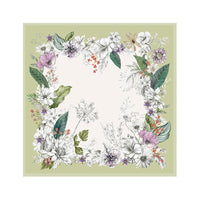
The silk scarf has re-emerged in 2025 not merely as a seasonal “neck warmer” but as a versatile, statement accessory worn as a headscarf, belt, bag ornament, or even a lightweight top. This resurgence affects buying behavior across consumer and wholesale channels: customers now seek authentic 100% mulberry silk pieces with clear quality indicators and styling versatility.

Why the Silk Scarf Is Back (and Stronger Than Ever):
Fashion editors and lifestyle outlets attribute the trend to a broader appetite for compact, high-impact accessories that deliver both heritage elegance and styling flexibility. High-visibility placements—editorial shoots, celebrity street style, and viral short videos—have accelerated adoption: shoppers move from single-use neckwear toward scarves that function as belt accents, head coverings, or decorative bag ties. For merchants, this means presenting each SKU with multiple use-case images and short styling clips to reflect real-world applications.
Practical Styling: Beyond the Neck:
Contemporary styling guides emphasize four high-impact applications that convert well in visual commerce:
- the square scarf folded and tied as a neckerchief or headscarf
- the long oblong worn as a belt or waist tie
- small folded scarves looped as bag accents
- layered scarves for editorial or elevated casual looks. Demonstrable styling increases perceived value and helps justify a premium price for higher-spec items such as 19–22 momme mulberry silk with hand-rolled hems.
Patterns, Sizes, and Market Preferences:
In 2025 buyers are favoring classic prints (paisley, florals, geometric motifs) and a clear size range: square scarves around 70–90 cm for neck/head use and oblong/long scarves (160–180 × 50–70 cm) for waist and layering applications. For premium listings, specify construction details—hand-rolled hem, charmeuse finish, and explicit momme weight—so customers can distinguish between imitation satin and genuine mulberry silk.
Sustainability, Safety, and Traceability — What Buyers Ask For:
Sourcing transparency and third-party certifications increasingly influence purchasing decisions. Labels such as OEKO-TEX® STANDARD 100 and traceability claims (made-in / certified supplier statements) reassure both retail customers and B2B buyers concerned about chemical safety and ethical supply chains. Listing certifications and providing a downloadable material specification sheet strengthens credibility and reduces pre-sale friction for wholesale inquiries.

Product Specification Checklist for High-Converting Listings:
For each mulberry silk scarf SKU include: material statement (e.g., “100% Mulberry Silk, Grade 6A”), momme weight (e.g., 19–22 momme), dimensions, hem type (hand-rolled or machine-stitched), print method (digital/screen), care instructions, and certification badges. For wholesale pages, add MOQ, lead time, sample policy, and private-label options. These structured details make your listings searchable and answer procurement questions before they’re asked.
How womanscarf.com Presents Mulberry Silk Differently:
At womanscarf.com we curate mulberry silk scarves with clear SKU cards that highlight momme, hand-rolled hems, available sizes, and OEKO-TEX certification where applicable. Each product page includes three high-resolution styling images (neck/head, waist/belt, bag accent) and a brief 20–30 second styling clip suitable for social ads. For wholesale buyers we provide a downloadable technical datasheet and sample pack options to facilitate rapid evaluation and bulk ordering. (Visit womanscarf.com to view current collections and wholesale terms.)
FAQ:
Q1: What is the ideal momme weight for a versatile mulberry silk scarf?
A1: For multifunctional use (neck, head, belt), 19–22 momme offers a balanced hand-feel and drape that works across the styles discussed above. Lighter weights (14–16 momme) suit hair accessories and summer wraps; heavier (≥22 momme) are best for luxury drape and longevity.
Q2: How should I present scarves on my Shopify product page to capture this trend?
A2: Use a concise title with keywords (e.g., “100% Mulberry Silk Scarf — Hand-Rolled Hem — 90×90 cm”), a short first paragraph that mentions mulberry silk and momme, three styled images showing alternate uses, an embedded short styling video, and a visible certification badge if available. Include product tags such as “silk scarf,” “mulberry silk,” “hand-rolled hem,” and “scarf-as-belt.”
Q3: Do buyers care about certifications such as OEKO-TEX®?
A3: Yes. Certifications reduce perceived risk for both retail customers (skin sensitivity, chemical safety) and wholesale purchasers (supply-chain compliance). Display certificates and offer a downloadable material sheet for B2B buyers.
Q4: What are fast-moving patterns and sizes in 2025?
A4: Classic paisley and floral prints remain popular, while square scarves sized 70–90 cm and long oblongs around 160–180 cm are high-velocity SKUs for styling versatility. Include these as core stock items and test limited-edition prints to create urgency.