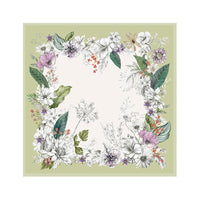

A balanced scarf assortment gives customers a clear choice without making the display feel repetitive. For most boutiques, the goal is not to stock every floral print available. It is to select a controlled mix of easy-to-wear patterns, stronger statement designs, useful color families and scarf formats that fit the store’s actual customers.
The best starting point is a small test assortment. Define who the scarves are for, group the designs by role, check the exact product specifications, and learn from real customer response before reordering.
Start With the Customer, Not the Pattern
Before comparing prints, describe the customer who is most likely to buy them. A boutique serving modest-fashion shoppers may evaluate coverage, opacity and styling stability. A gift shop may care more about presentation, color appeal and easy gifting. A fashion-accessory store may need a mix of subtle everyday designs and distinctive display pieces.
Write down three practical answers:
- How will the customer wear the scarf: around the neck, over the hair, as a headscarf, or as a larger wrap?
- Which colors already sell well in the store’s clothing and accessories?
- Does the customer usually choose understated pieces, bold designs, or both?
These answers create a buying filter. A beautiful print that does not suit the store’s customer, climate or typical outfit is still the wrong product for that assortment.
Divide the Assortment Into Three Design Roles
An assortment becomes easier to manage when every design has a role. A simple structure is core, seasonal and statement.
| Design role | What it does | Typical visual direction | Buying approach |
|---|---|---|---|
| Core | Supports frequent, easy styling | Small florals, controlled contrast, familiar color combinations | Give these designs the broadest test depth |
| Seasonal | Refreshes the collection | Current seasonal colors, botanical themes or event-relevant palettes | Buy in smaller, time-bound groups |
| Statement | Creates visual interest and display impact | Large motifs, stronger contrast, artistic or unusual layouts | Test selectively before increasing quantity |
This structure prevents two common problems: a collection in which every scarf looks almost the same, and a collection made entirely of bold designs that attract attention but are harder to coordinate with everyday outfits.
Balance Print Scale

Print scale changes how a scarf looks when it is folded. A large botanical motif may look dramatic when the scarf is open but show only fragments after it is tied. A small repeated print can remain visually consistent through different folds, but too many similar small prints can make the collection feel flat.
Use three practical groups:
- Small-scale prints: useful for customers who prefer subtle detail and easy coordination.
- Medium-scale prints: a flexible middle group that can provide visible pattern without dominating an outfit.
- Large-scale or border-led prints: stronger display designs that need to be evaluated in both the open and folded positions.
When reviewing a product, do not rely on the flat catalogue image alone. Ask for or create images showing the scarf folded, draped and tied. The customer buys the finished look, not only the artwork seen from above.
Build a Useful Color Mix
A balanced color plan should connect to the rest of the boutique. Start with existing clothing, handbags, jewelry or modest-fashion colors, then choose scarves that can complete those outfits.
One practical method is to divide the first test order into:
- light and neutral combinations;
- familiar mid-tone colors;
- darker or high-contrast options;
- a small number of accent colors.
The exact mix should follow the boutique’s sales history. If no reliable sales history exists, keep the first test broad but shallow: more color directions, fewer units per unproven design. Reorders can then concentrate on the combinations customers actually select.
Avoid treating “floral” as one color category. Two floral scarves can serve very different customers when one uses soft, low-contrast tones and the other uses saturated color with a dark background.
Match the Scarf Format to the Intended Use

Pattern is only one part of the buying decision. The scarf’s finished size, shape, fabric composition, weight, edge finish and care instructions all influence how it can be worn.
Before adding a design to the assortment, verify:
- finished length and width;
- square or rectangular construction;
- stated fiber composition;
- transparency and coverage where relevant;
- edge treatment and visible finishing;
- care instructions;
- how the print appears on the reverse side;
- whether the sample matches the listing images.
Do not assume that every item in a collection shares the same material or dimensions. Check the individual product specification, especially when similar prints appear on different scarf formats.
Test Variety Without Creating Unnecessary Inventory
For a first order, variety is usually more informative than deep quantity in every design. A controlled test can reveal whether customers respond more strongly to print scale, color family, scarf format or price position.
Create a buying sheet with one row per design and record:
| Field | Why it matters |
|---|---|
| Design role | Shows whether the assortment has enough core, seasonal and statement options |
| Print scale | Prevents too many visually similar choices |
| Main color family | Connects scarves to the rest of the store |
| Size and shape | Confirms the intended styling use |
| Material as specified | Prevents incorrect product descriptions |
| Test quantity | Limits exposure before demand is proven |
| Display or campaign plan | Ensures the design has a clear route to the customer |
| Reorder decision | Captures what to repeat, adjust or stop |
Test quantity should be decided from the boutique’s budget, expected traffic, supplier terms and sales cycle. There is no universal quantity that is correct for every store.
Evaluate Samples Before Committing to a Larger Order
A product image cannot confirm hand feel, color accuracy, stitching or the way a scarf behaves when folded. When the order size or customization risk is meaningful, evaluate a physical sample before committing to a larger quantity.
During sample review, check the scarf in normal and bright light, compare its measurements with the specification, inspect the edges and corners, and test at least two intended styling methods. Photograph the sample in the same type of lighting used for the boutique’s product content. This helps reveal whether the design is easy to present accurately online.
If the order includes custom colors, packaging or labels, approve those elements separately and keep the approved reference for comparison with later production.
Use Customer Response to Guide Reorders
The first order is a learning set. Record more than total sales. Useful signals include product-page visits, saves, questions, try-ons, internal search terms, returns and the outfits customers pair with each scarf.
After the test period, classify each design:
- Reorder: clear customer demand and a suitable margin after all costs.
- Adjust: interest exists, but color, format, presentation or quantity needs refinement.
- Replace: the design does not fit the store’s customer or is too similar to a stronger option.
- Retain as a display piece: the design supports visual merchandising even if it is not stocked deeply.
This approach turns scarf buying into a repeatable assortment process rather than a sequence of isolated design choices.
A Simple Pre-Order Checklist
Before placing a wholesale scarf order, confirm:
- The intended customer and use case are clear.
- The assortment includes core, seasonal and statement roles.
- Print scales and color families are balanced.
- Individual product sizes and materials have been verified.
- Samples have been checked where the risk justifies it.
- Test quantities match the store’s budget and sales cycle.
- Every design has a display, content or merchandising plan.
- Reorder decisions will be based on recorded customer response.
Frequently Asked Questions
How many floral scarf designs should a boutique start with?
There is no universal starting number. Begin with a test range that is broad enough to compare print scale, color and format but small enough to control inventory risk. The boutique’s budget, visitor volume, supplier terms and sales cycle should determine the final quantity.
Should a boutique stock only current scarf trends?
No. A trend-only assortment can age quickly and may not serve regular customers. Combine easier core designs with a smaller number of seasonal and statement options, then adjust the balance using actual customer response.
Are small floral prints easier to sell than large prints?
Not in every store. Small prints often create a quieter look, while large motifs can provide stronger visual impact. The better choice depends on the customer, scarf size, way the item is folded and the colors carried elsewhere in the boutique.
What should buyers check on a scarf sample?
Check measurements, stated composition, color, print clarity, reverse-side appearance, edge finishing, care requirements and performance in the intended styling method. Compare the physical sample with the supplier’s specification and listing images.
How should boutiques decide which scarves to reorder?
Use recorded customer behavior rather than personal preference alone. Review sales, enquiries, try-ons, saves, returns and styling questions, then classify each design as reorder, adjust, replace or retain only for display.
Build the Next Assortment With a Clear Buying Brief
Before contacting a supplier, prepare a short brief containing the customer profile, preferred scarf formats, color directions, print-scale mix, estimated test quantities and any sample or packaging requirements. A precise brief makes product selection and quotation clearer for both buyer and supplier.
Browse the Floral Scarf collection to compare available designs, or send your assortment requirements for review.