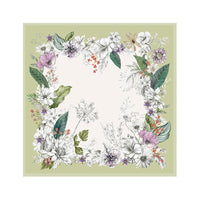
Large floral artwork can disappear when a shawl is folded without checking the print first. The practical answer for poppy print shawl styling is to choose the flower cluster you want to show, then plan the fold width, border direction, and hanging ends around that section. This order keeps the print in control of the drape instead of letting a knot or loop hide it by accident.
The featured Red Poppy Wrap Shawl provides a clear example. Its verified gallery images show large red poppies and teal stems on a pale aqua field, framed by a dark teal border and short fringe. A pink-toned surface is also visible when parts of the shawl turn over. The listing identifies a 180 × 70 cm format, cotton and linen, and digital print; these are listing specifications rather than independent test results.

Map the Print Before You Fold
Lay the shawl flat on a bed, table, or other clean surface. Do not start with a favorite knot. First identify the visible zones that will change when the rectangle is folded.
- Main flower field: Find one or two poppy clusters you want to remain visible. Note whether they sit near the center, an end, or an outer edge.
- Dark teal border: Follow the border around the visible face. Decide whether it should frame the shoulders, run down the front, or sit at the lower edge.
- Fringed ends: Locate both short ends. A loop can bring them together, while an asymmetrical drape can place them at different heights.
- Pink-toned visible side: The gallery shows this color when the fabric turns. Decide whether you want a deliberate contrast panel or prefer the poppy face to stay outward.
Take a quick phone photo of the flat layout. It becomes a reference when a fold makes it difficult to remember where the main flower started.
Four Ways to Keep the Poppy Motif Visible
The verified gallery shows several useful arrangements. Each one exposes a different portion of the print.
1. Broad Shoulder Wrap
Open the shawl across the upper back and both shoulders, then bring the ends forward. This method preserves the greatest visible width and gives several flower clusters room to appear at once.
Before placing it, check which long edge carries the cleanest border line for your preferred view. Position the chosen poppy cluster on the outer face and smooth the fabric across the shoulders. If you reduce the width, make a loose fold and look at the outer surface before putting the shawl on.
The motif can disappear when the main cluster lands inside the fold or directly behind the neck. If that happens, reopen the shawl and move the fold away from the flower. A slightly uneven fold is acceptable when it reveals the section you selected.

2. Diagonal Coat Drape
Place one section over a shoulder and let the shawl travel diagonally across a plain coat. The gallery demonstrates how a pale outer layer can frame the aqua, teal, and red areas without covering the full width.
Choose the shoulder according to the flower placement, then bring the main cluster toward the open chest area. Watch the coat lapel and underarm: either can cover a large part of the motif. Move the shawl outward or upward until at least one complete poppy remains visible from the front.
Use the border as a guide. When it forms a clear diagonal line, the arrangement reads as intentional even if the two ends do not hang at the same height.
3. Front Loop with Two Printed Panels
The gallery also shows a looped neckline with two panels falling down the front. Start with a broad lengthwise fold, place the middle section around the neck, and bring the ends forward. Keep the loop loose enough to adjust the printed panels without forcing the fabric.
This arrangement can hide a flower inside the neck loop. Before finishing, pull a different section forward and compare both panels in a mirror. One panel can show the main cluster while the other shows the border, stems, or pink-toned turn. They do not need to match exactly; they need a clear visual relationship.

4. Loose One-Shoulder Fall
For the least folded option, place the shawl over one shoulder and let one long section fall at the front while the other rests behind. Keep the fabric relatively flat across the shoulder so the print remains readable.
This method works best when you choose the front section while the shawl is still flat. If the border bunches at the shoulder, smooth it into a line and let the flower field sit lower on the chest. A small glimpse of the pink-toned side can be used as an accent, but turn it deliberately rather than leaving a random twisted edge.
Run a Five-Minute Mirror Test
The arrangement may look clear when first placed and change after normal movement. Use this short check before deciding that the drape is finished.
1. Front view: Can you see at least one recognizable poppy without moving the fabric? 2. Three-quarter view: Does the featured cluster remain visible when you turn slightly? 3. Arm movement: Raise and lower your arms once and observe which fold shifts. 4. Border check: Is the teal border visible as a planned line, or has it twisted under another layer? 5. End check: Look at the two fringed ends and the reverse side. Decide whether their position matches the intended arrangement.
If the flower disappears, adjust the fold that covers it rather than rebuilding every layer. This makes the test fast enough to repeat with different coats or tops.
Choose Surrounding Colors from the Shawl
The gallery provides a usable palette: pale aqua, red, teal, dark teal, cream, and muted pink. A simple solid garment gives the large motif more open space, but the exact choice depends on the effect you want.
- Cream or white: The product photos show the print against light outerwear, creating clear separation around the red flowers.
- Teal: A solid layer can repeat the stems or border without adding another motif.
- Muted pink: This can connect with the turned section that appears in several views.
- Dark neutrals: These may increase contrast around the pale aqua field; check the result in the light where the outfit will be worn.
If another pattern is part of the outfit, compare its scale and placement in a mirror. Leave some plain space near the main flower so both patterns do not occupy the same visual area.

What Product Photos Can Confirm
The images confirm the visible color relationships, large flower placement, border, fringe, and several styling arrangements. They also show how different folds reveal different parts of the artwork.
Photos do not confirm color accuracy on every screen, the exact hand feel, long-term fringe behavior, care performance, or how a particular unit will align after repeated use. If one of those details affects a buying decision, confirm it on the item or a sample rather than inferring it from a styled image.
Photo and Sample Inspection Checklist
Use the same checklist for a product sample or a new set of merchandising photographs.
- Lay the shawl flat and photograph the complete flower field.
- Identify where the largest clusters sit relative to the border and short ends.
- Check whether the border appears continuous around the visible face.
- Compare both fringed ends and record any visible difference.
- Turn one panel to document the reverse or alternate visible side.
- Recreate the intended fold and photograph it from the front and side.
- Compare the red, aqua, teal, and pink areas under neutral light.
- Record observations about the specific sample without turning them into batch-wide claims.
This record makes future styling and product conversations more precise because everyone can refer to the same section of the print.
Frequently Asked Questions
Should I always fold a large floral shawl lengthwise?
No. Fold only after checking that the selected flower remains on the outside. The broad shoulder method can also use more of the full width.
What if the main poppy keeps moving under my arm?
Start with the chosen cluster closer to the center of the visible front panel. Then move the border outward and retest the drape with normal arm movement.
How do I choose between a loop and a broad wrap?
A loop creates two narrower front panels. A broad wrap preserves more of the overall field. Choose according to how much of the motif you want to show.
Can the pink-toned side be shown deliberately?
Yes. Turn a small end or panel outward and repeat that color elsewhere if desired. Check that the turn looks placed rather than twisted.
What specifications does the listing provide?
The listing identifies cotton and linen, digital print, and a 180 × 70 cm format. Product-specific questions should be confirmed with WomanScarf before a buying decision.
Conclusion
Keeping a large poppy print visible begins with the flat artwork. Choose the cluster, trace the border, locate both fringed ends, and then select the fold. A broad wrap reveals more of the flower field, a diagonal coat drape creates a strong line, a front loop divides the print into panels, and a one-shoulder fall keeps the arrangement relatively open. The five-minute mirror test shows which option preserves the motif in normal movement.
View the Red Poppy Wrap Shawl to compare all six gallery images. For product-specific questions, contact WomanScarf and include the product link and the styling or sourcing detail you want confirmed.